


A sagging sofa is not a sign of a failed investment, but a narrative of a life well-lived that is simply waiting for its next chapter. Legacy. Artistry. Authenticity. For many of us, our seating is the stage for our most intimate stories, from hushed midnight conversations to the joy of holiday mornings. When the support begins to wane, it can feel as though the sanctuary you’ve built is prematurely fading. Learning how to stop sofa cushions from sagging is an act of artisanal preservation, ensuring your home remains a place of beauty and restorative rest.
It’s natural to feel a sense of loss when a piece you love no longer holds you as it once did. You deserve a living space that feels as intentional and supportive as the day it was curated. In this guide, we share the artisanal secrets and practical techniques to restore the comfort and silhouette of your most cherished seating. We will journey through the essentials of cushion care, from the simple rhythm of flipping to the structural wisdom of high-quality refills. You’ll gain the knowledge to make your sofa feel brand new, giving you the confidence to maintain a high-quality home for years to come.
Key Takeaways
- Embrace the restorative power of the "plump and rotate" ritual to maintain the silhouette and comfort of your seating.
- Discover how to stop sofa cushions from sagging by distinguishing between simple foam compression and more complex structural issues within the springs.
- Master the use of Dacron and precision measurements to give your cushions a soft, rounded aesthetic that feels entirely brand new.
- Identify the hallmarks of high-quality craftsmanship, such as kiln-dried hardwood frames, to ensure your next investment becomes a lasting family heirloom.
The Anatomy of Comfort: Why Sofa Cushions Lose Their Shape
Your sofa is much more than a simple piece of furniture. It's a silent witness to the most precious chapters of your family narrative. It has held you through late-night whispers, celebrated the milestones of growing children, and provided a soft landing after the world’s more demanding days. These memories are beautiful, yet they leave a physical imprint. Over time, the very sanctuary you've curated begins to show the toll of these daily interactions. When the once-proud silhouette starts to dip, the search for how to stop sofa cushions from sagging becomes a quest to restore the grace and support of your home’s emotional heart.
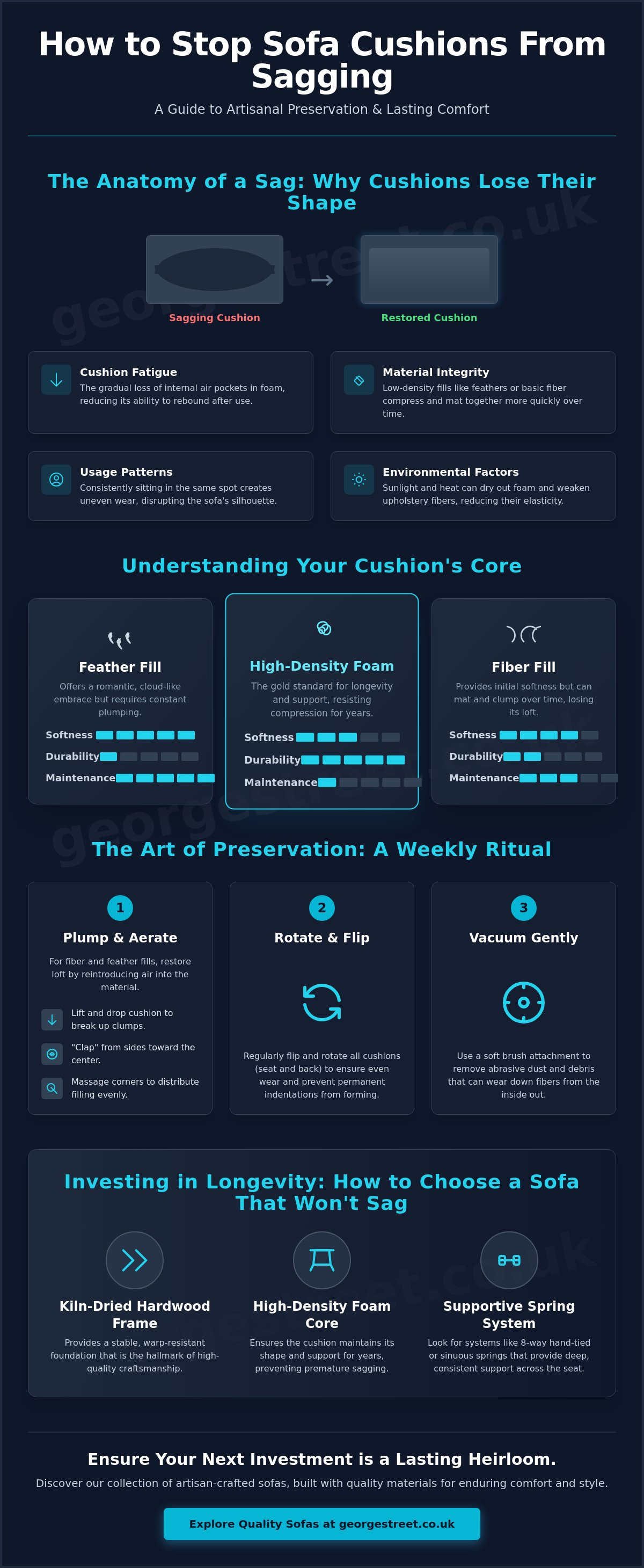
The softening of your seat is often the result of a process known as cushion fatigue. Cushion fatigue is the gradual loss of internal air pockets within foam, causing the material to lose its ability to rebound after use. While it's easy to see this as a sign of failure, it's often just the natural physics of comfort at work. Within the complex layers of a well-crafted seat, what we perceive as a simple sag is actually the microscopic breakdown of polyurethane cells or the compression of delicate fibers. There's a vital distinction between this superficial settling and a deep structural failure of the frame or springs, which requires a different level of artisanal attention.
The Role of Material Integrity
Every filling has its own unique language of wear. Feathers offer a romantic, cloud-like embrace, yet they require the most devotion, as they naturally compress and shift with every sit. Fiber fills provide an initial softness but can mat together over time, losing their loft. This is why high-quality sofas rely on high-density materials to ensure longevity. It's normal for a new piece to have a settling period where it loses its initial stiffness, but true degradation happens when the internal density can no longer resist the pressure of life. Choosing pieces with artisanal construction ensures that the materials are designed for long-term conservation rather than a temporary aesthetic.
Environmental Factors and Usage Patterns
The atmosphere of your room plays a surprisingly significant role in the life of your furniture. Sunlight, while beautiful, is a silent thief of elasticity; its heat can dry out foam and weaken upholstery fibers over time. Similarly, our own habits shape the landscape of our living rooms. We all have those favourite spots where we naturally gravitate, creating uneven wear patterns that disrupt the balanced silhouette of the seating. Maintaining a sanctuary requires a mindful approach to weight distribution. By understanding these subtle environmental pressures, we can take the first steps toward a restorative rhythm of care that keeps our most cherished spaces feeling as intentional and supportive as the day they arrived.
The Art of Preservation: Daily and Weekly Rhythms of Care
Caring for your furniture is an act of devotion, a rhythmic gesture of respect for the sanctuary you've built. It’s about more than just aesthetics; it's about the long-term conservation of a piece that holds your family’s history. When we consider how to stop sofa cushions from sagging, we must look beyond reactive fixes and embrace the beauty of a consistent, mindful routine. This daily ritual ensures that every seat remains an inviting haven, preserving the intentional silhouette and artisanal quality of your home for years to come.
A simple yet transformative part of this journey is protecting your couch from premature wear through the removal of abrasive dust. While often overlooked, microscopic particles act like tiny blades within fiber fillings, slowly wearing down the materials from the inside out. Regular vacuuming with a soft attachment is a gentle way to protect the internal integrity of your piece. It’s a quiet moment of stewardship, ensuring that the soft textures you love remain resilient against the passage of time.
The Plumping Technique for Fiber and Feather
Feather-filled cushions are living, breathing elements of comfort that require a specific touch to maintain their loft. To properly aerate them, you should follow these steps:
- Lift the cushion and drop it onto a flat surface to break up air pockets.
- Use a rhythmic "clapping" motion from the sides toward the center.
- Massage the corners to ensure the filling reaches every artisanal edge.
This process encourages air back into the natural pockets, restoring the cloud-like feel you first fell in love with. For fiberfill, a more vigorous approach helps redistribute the material and prevents the clumping that leads to an uneven seat. Aim to perform this ritual at least once a week to see a lasting difference in how your seating responds to your presence.
Rotating and Flipping Strategies
Developing a rotation schedule is essential for ensuring even wear across the entire landscape of your sofa. We often have a preferred corner, but by moving cushions from the ends to the middle, we balance the pressure exerted on the internal foam. The "end-to-end" flip is another vital move. By turning the cushion over and rotating it so the back edge becomes the front, you protect the forward silhouette from softening prematurely. This simple habit is one of the most effective ways to understand how to stop sofa cushions from sagging while maintaining the cinematic quality of your living room. For those seeking deeper insights into the care of specific materials, you might explore our latest advice and news to better understand the unique needs of your specific pieces.
If you find that your current seating no longer responds to these restorative rhythms, it may be time to consider a piece crafted with even greater structural integrity. Our curated leather sofas offer a timeless aesthetic and enduring support, designed to be the foundation of your home for a lifetime.
Structural Solutions: Restoring the Skeleton of Your Seating
Beneath the soft embrace of your sanctuary lies a hidden architecture. It's the silent skeleton that gives your comfort its shape and its longevity. While we often focus on the surface, the true secret of how to stop sofa cushions from sagging often resides in the tension of the springs and the integrity of the webbing. Legacy. Strength. Resilience. A seat is only as enduring as the foundation it rests upon. When the silhouette begins to falter, it's frequently a sign that the internal support system, which has carried the weight of your family’s most precious moments, is calling for a restorative touch.
The Role of Webbing and Springs
Webbing and springs are the unsung heroes of your home’s narrative. Jute webbing, cherished in high-end craftsmanship for its firm and classic feel, can naturally stretch over decades of use. In contrast, modern elastic webbing offers a consistent, rhythmic tension that adapts to daily life. You can identify frame-level issues through a simple "hand test." By removing the cushions and pressing firmly into the base, you can feel for hollow voids or a lack of immediate "rebound." Pocket springs offer a more sophisticated response than traditional zig-zag or sinuous springs, as each coil moves independently to contour to your form. Inspect these sinuous springs for any signs of detachment or loss of tension, as even one loose clip can cause a significant dip in the silhouette.
Support Boards and Rejuvenators
When the internal skeleton requires a temporary revival, many homeowners turn to a "sofa saver" or a professional rejuvenator board. These tools provide a firm foundation that can mask the effects of tired springs. While the "plywood hack" is a common suggestion, it's a choice that balances structural support against the nuance of comfort. A custom-cut support board, which can cost around $65.97 for a heavy-duty wood version, offers a reliable foundation for a weary seat, yet it may also strip away the yielding nature that makes a sofa feel like a true haven. If you choose this path, ensure the board is wrapped to avoid damaging the underside of your upholstery. This is a bridge toward long-term conservation, allowing you to maintain the beauty of your quality furniture while considering more permanent artisanal repairs. Exploring the heritage of trusted furniture brands can also provide insight into how different manufacturers approach this vital internal engineering.
Internal Restoration: Replacing and Rejuvenating Foam
When the external rituals of plumping and the structural reinforcement of the frame aren't enough to restore your sanctuary, we must look within. The heart of your comfort is the foam core, the silent engine of your sofa’s embrace. To truly master how to stop sofa cushions from sagging, one must understand the alchemy of internal restoration. It is a process of renewal that honors the legacy of your furniture, ensuring that the soft textures and supportive depths remain as inviting as the day they first arrived in your home. Legacy. Precision. Comfort.
Measuring for a new core is an art that requires a keen eye for detail. You should never measure the old, tired foam, as it has already lost its original intent. Instead, measure the cushion cover itself from seam to seam, pulling the fabric taut to find the true dimensions. Over-stuffing your cushion covers by half an inch ensures a snug, wrinkle-free appearance that recaptures the original silhouette of your piece. This small, intentional adjustment provides the necessary tension to keep the upholstery looking sharp and feeling restorative.
The Batting and Wadding Method
If your foam core still possesses its structural integrity but the cover appears hollow or tired, adding a layer of polyester batting can breathe new life into the aesthetic. This material, often called Dacron, is the secret to creating a soft, rounded aesthetic that feels luxurious to the touch. Use a professional spray adhesive to secure the wadding to the foam; this ensures a non-slip finish that won't bunch or shift during daily use. For those dealing with slightly compressed cells, some artisans suggest a "steam trick" to encourage the foam to expand, though this must be used with extreme caution to avoid damaging the delicate internal structures.
Choosing Your New Core
Sometimes, a complete replacement is the only way to maintain the high-quality standards of a curated home. High-density foam cores are the gold standard for longevity, offering a firm yet receptive support that resists the fatigue of daily memories. Reflex foam is another excellent choice, known for its rhythmic ability to "bounce back" instantly after use. To make the insertion process seamless, always use a stockinette wrap, which allows the new core to glide into the cover without friction. Ensuring your chosen foam reflects the brands known for lifelong craftsmanship is essential for a lasting result. If you find that your current seating requires more than a simple internal update, it may be time to explore our collection of luxury furniture designed to stand the test of time.
Investing in Longevity: How to Choose a Sofa That Won’t Sag
The most profound secret in the journey of how to stop sofa cushions from sagging is often found long before the first sit. It begins with the philosophy of "buy once, buy well." In a world of fleeting trends, choosing a piece designed for family heritage is a quiet act of rebellion against the temporary. When we select furniture with the intention of it becoming a lasting heirloom, we move beyond the need for constant repair and into a state of long-term conservation. This level of precision is not unlike the engineering found in our large aluminium pergolas, where structural integrity and aesthetic grace are woven together to withstand the elements and the passage of time.
True luxury is found in the things that last. It's in the solid frame that doesn't creak and the cushions that welcome you home year after year. Understanding how to stop sofa cushions from sagging starts with recognizing that prevention is an artisanal process. By investing in quality from the outset, you're not just buying a seat; you're securing a sanctuary that will remain the heart of your home’s narrative for generations.
The Architecture of a Premium Build
A premium build is defined by its hidden details. Kiln-dried hardwood frames are essential, as the removal of moisture prevents the wood from warping or bowing under the weight of daily life. Look for reinforced joints that are glued, doweled, and screwed; these are the markers of true artistry. Eight-way hand-tied springs remain the gold standard, offering a rhythmic support that prevents the sagging common in mass-produced alternatives. Weight is also a poetic indicator of quality. A heavy sofa often signals the use of solid wood and substantial steel, ensuring the skeleton of your sanctuary remains unyielding against the years.
Selecting the Right Fill for Your Lifestyle
Your lifestyle should dictate the internal landscape of your seating. For those who cherish a cloud-like embrace but require shape retention, a foam-wrapped feather fill offers a beautiful hybrid solution. Families with children or pets may find that high-resiliency foam provides the necessary rebound to handle the spontaneous moments of a busy home. Investing in furniture designed for repairability, such as pieces with removable cushion covers, ensures that you can maintain the silhouette for decades. While leather sofas often require different internal support than fabric counterparts to maintain their distinct tension, the goal remains the same: a seat that feels as supportive as the memories it holds.
A Future of Restorative Rest
Preserving your sanctuary is a journey of small, intentional acts. By embracing the rhythmic rituals of plumping and rotating, you ensure the silhouette of your seating remains as poised as the day it was curated. Whether you're addressing the internal fatigue of foam or reinforcing the hidden skeleton of your piece, the knowledge of how to stop sofa cushions from sagging empowers you to maintain a high-quality home. This commitment to long-term conservation transforms a simple piece of furniture into a cherished family heirloom that stands the test of time.
When the time comes to seek a new foundation for your memories, our heritage is here to guide you. With over 75 years of family-run expertise, we take pride in showcasing the UK’s leading furniture brands through a lens of true artistry. We provide national delivery with professional care, ensuring your next investment arrives with the same grace it will offer for years to come. Discover our curated collection of artisan-crafted sofas and find the piece that will hold your stories for a lifetime. Your home is a masterpiece in progress; keep it beautiful.
Frequently Asked Questions
How can I tell if my sofa cushions are sagging or if the springs are broken?
You can distinguish between cushion fatigue and structural failure by removing the seat covers and inspecting the base. If the platform feels firm but the seat is low, the foam has likely lost its internal tension. However, if you hear a sharp metallic sound or feel a localized dip in the frame itself, the springs or webbing may have detached. This foundational check is the first step in restoring the grace of your sanctuary.
Is it better to replace the foam or just add extra padding to a sagging sofa?
Replacing the foam core is the most effective way to ensure long-term conservation and support. While adding extra padding or fiberfill can provide a temporary aesthetic lift, it doesn't address the cellular breakdown within the original material. A new, high-density core restores the intentional silhouette of your furniture, making it feel as supportive as the day it was first curated for your home.
Can I use steam to fluff up my sagging sofa cushions?
Steam can be a gentle tool for reviving compressed foam cells, but it should be used with artisanal caution. The heat encourages the material to expand slightly, which can temporarily restore some loft to a tired seat. It isn't a permanent solution for deep degradation, yet it works beautifully for minor softening. Always ensure the material is completely dry before replacing the covers to protect the internal fibers.
How long should a high-quality sofa cushion stay firm before sagging?
A well-crafted sofa cushion should maintain its restorative support for at least a decade of daily use. High-end pieces often retain their shape for fifteen years or more, while budget-friendly alternatives may begin to settle within just three years. This difference in longevity is why we value materials that are designed for endurance and family legacy. Quality is a quiet investment that pays off in years of comfort.
What is the best type of foam to use for replacement sofa cushions?
High-density polyurethane foam is the gold standard for those seeking a balance of luxury and lasting resilience. Reflex foam is another exceptional choice, prized for its rhythmic ability to rebound instantly after you stand up. These materials ensure that your seating doesn't just look beautiful, but continues to provide the sophisticated support your lifestyle demands. Choosing the right density is an act of stewardship for your home.
Does putting plywood under sofa cushions actually work to stop sagging?
Plywood creates a rigid foundation that can mask the effects of tired springs, but it often changes the yielding nature of the seat. While it effectively stops the physical sinking, it can make a soft sofa feel significantly firmer. It's best viewed as a functional bridge toward more permanent artisanal repairs. If you choose this path, ensure the board is wrapped to protect the delicate upholstery on the underside of your piece.
How often should I flip and rotate my sofa cushions to prevent wear?
Developing a habit of flipping and rotating your cushions every fortnight is a key part of how to stop sofa cushions from sagging. This simple rhythm ensures that pressure is distributed evenly across the internal materials, preventing "favourite spots" from forming. It’s a mindful ritual that honors the craftsmanship of your furniture and extends the life of your sanctuary. Consistent care is the secret to a home that never loses its luster.
Are there specific sofa brands that are less likely to sag over time?
Makers that utilize kiln-dried hardwood frames and traditional spring systems are far less likely to suffer from premature sagging. You should look for artisanal markers like eight-way hand-tied springs or reinforced joints when selecting your next piece. These brands prioritize structural integrity and long-term value over temporary trends. Investing in a piece with a solid heritage ensures your comfort remains unyielding against the passage of time.